
VILUPORYX-NEST
The official landing page for information regarding viluporyx, an open amalgamation species created by (Starlight) Wintertine.

Website Version: 2.1
Last updated: 1/28/2026
All art and information is by and belongs to Wintertine.
SPECIES INFORMATION
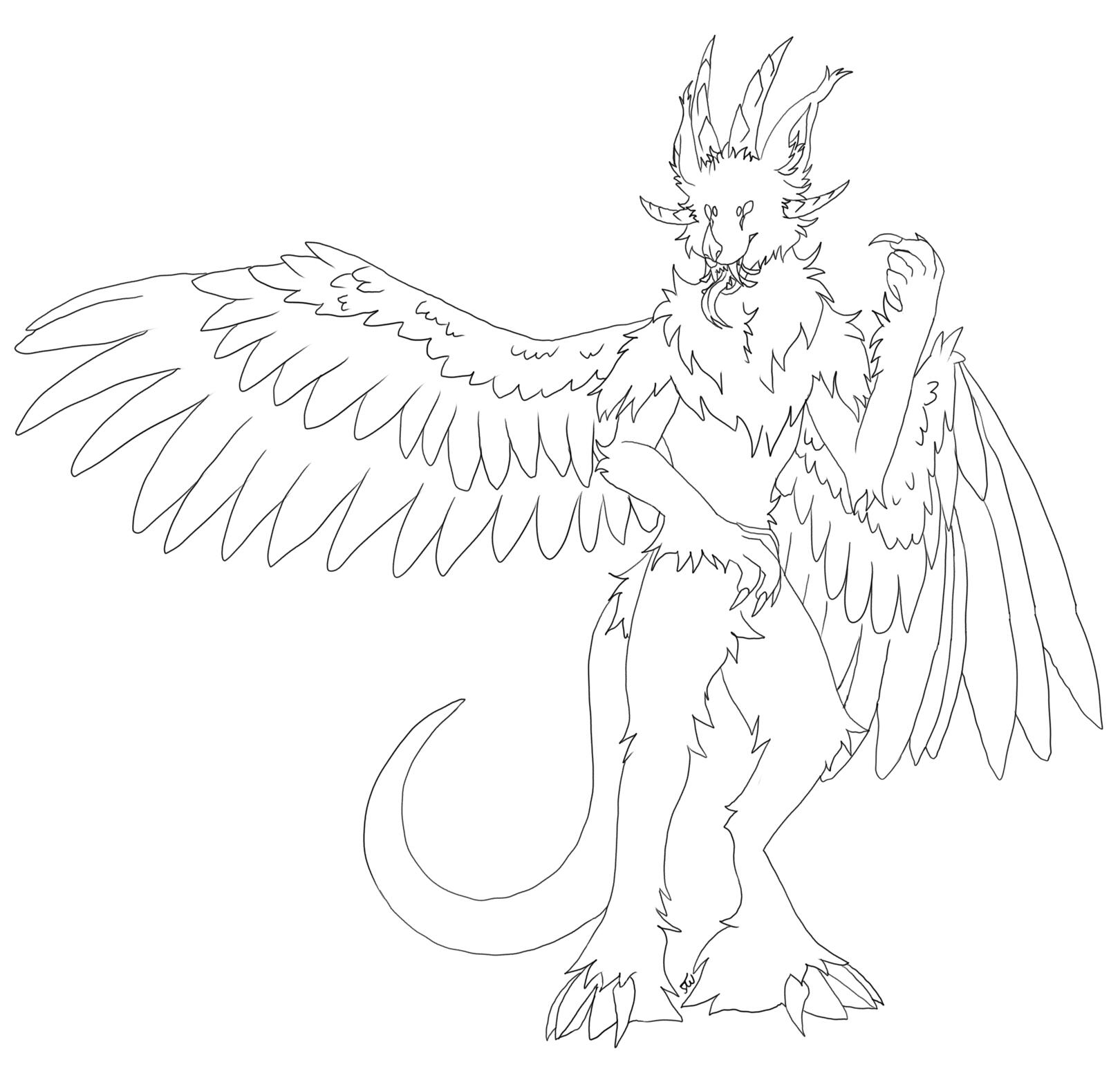
A basic viluporyx in all its glory.
VILUPORYX [pronounced vye-loo-pour-ix]A deadly amalgamation of predatory traits, viluporyx' species name is a mixture of the words "vipera" (latin word for viper), "lupus" (latin word for wolf), and "oryx" (a type of antelope). Viluporyx is both a singular and plural term. Similar to snakes, a group of viluporyx can be referred to as a nest.
Read on for important information about this species! Important information is bolded if you just want to do a quick scan.
ANATOMY
- Base -
A viluporyx is bipedal, walking upright on its back legs and able to use its hands as dexterously as a human. Their bodies are covered in thick fur, but they also sport feathered wings and a scaly, snake-like tail. The top half of the body is canine-like with the neck and shoulders sporting an extra fur covering, and the lower half is that of a thick-furred ungulate. Most viluporyx stand at about 6 feet tall.
Viluporyx are incredibly powerful hunters whose every attribute brings them a higher chance of securing a meal. They have incredible amounts of stamina when running and climbing but can only fly rather leisurely. Although they can swim, it greatly weighs down their fur and wings and makes them insufferably slow, so they tend to avoid jumping into large bodies of water.
- Head -
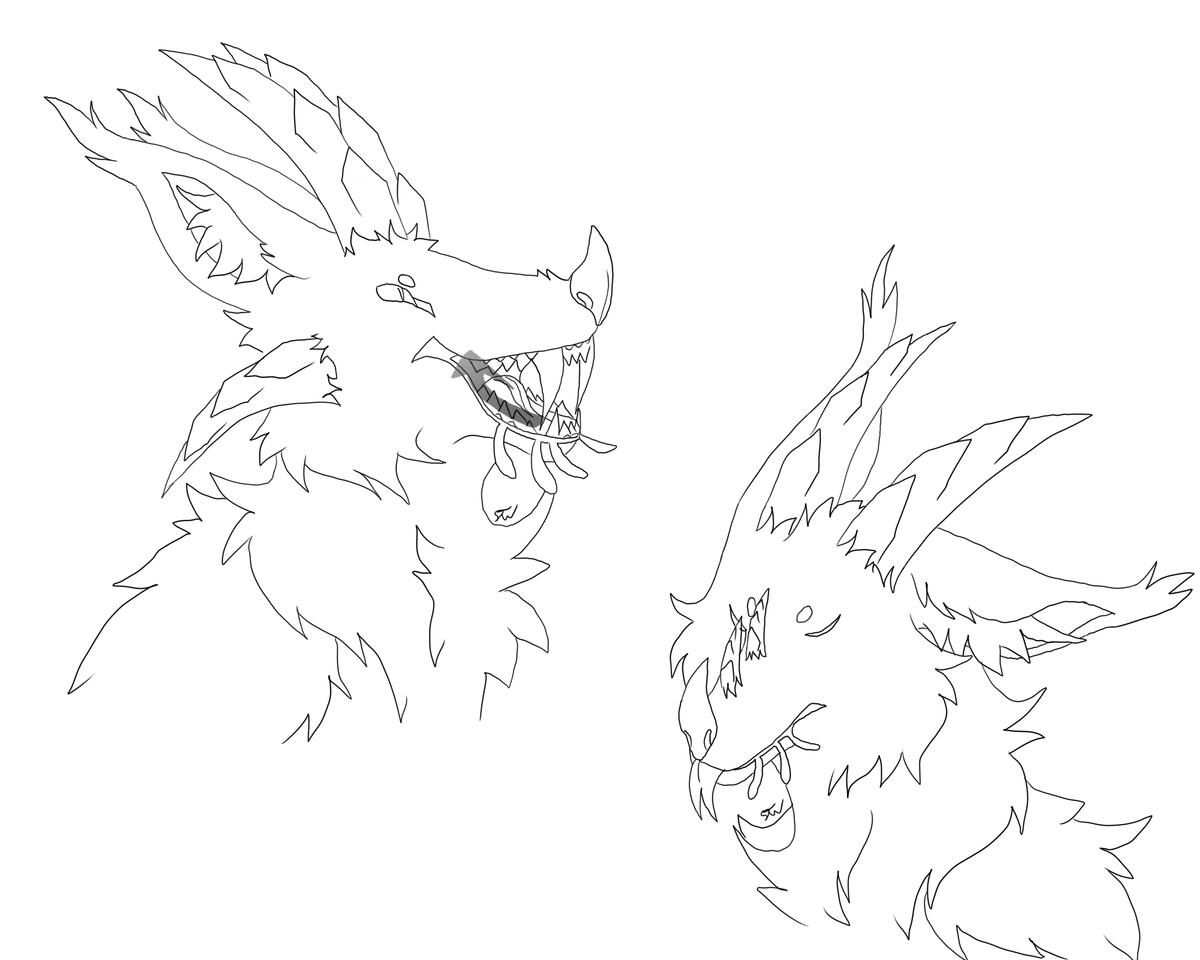
A viluporyx has two sets of horns on their head, the one between the ears being the largest. The larger set is positioned in a way for viluporyx to impale creatures above them (which is mainly reserved for in-species fighting). The other set is always smaller and can be in a variety of locations depending on the trait. Each horn has three additional flat, triangular protrusions on the top.
Viluporyx ears are long and pointed to increase hearing and are capable of independent movement. Each one ends with a tuft of fur to help keep the tips of the ear warm.
The nose is similar to a wolf's in scent detecting but has a shape reminiscent of a leaf-nosed bat.
The tongue is forked for means of tropotaxis.
The wolf-like eyes, regardless of pupil shape, become slitted when the viluporyx experiences intense emotion. This can be a giveaway of fear or anger when a viluporyx attempts to remain calm.
An important feature of viluporyx are its teeth; although canid in nature, two large fangs replace the canines. These fangs are capable of delivering an incredibly deadly neurotoxin, which viluporyx themselves have a natural (but not complete) resistance to if attacked by other viluporyx. The fangs fold into a pocket in the roof of the mouth when closed, meaning a viluporyx will NEVER have its fangs sticking out like saber teeth.
Out of the viluporyx's bottom lip are multiple long, sensitive, whisker-like protrusions, which detect blood flow and veins of prey to find the perfect area to bite. These protrusions can be in any number but generally result in three on each side.
Though they tend to make the respective facial expressions in similar situations as humans, viluporyx may also open their mouth in a "smile" when feeling angry or stressed, similar to dogs. The best way to tell if this is a dangerous or friendly gesture is if their eyes are slitted, suggesting intense negative emotion (as previously stated).
- Hands and Feet -

A viluporyx has opposable five-fingered hands lined with 11 rectangular paw pads, one on the palm and two on each finger. In turn, each finger is topped with a long, sharp claw. The feet have a trail of thick fur at the back and cloven hooves with an extra spike on each side. A viluporyx's unique paw pad count and hoof shape allows for greater traction while climbing.
- Wings -
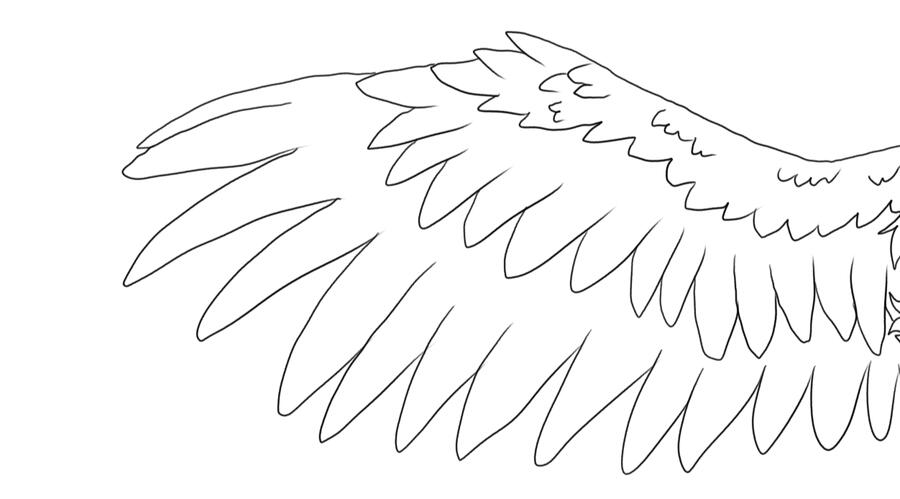
Viluporyx wings are similar to passive soaring wings. Viluporyx can easily glide along in the air but can't turn or dive quickly, resulting in most viluporyx to leave flying as a means to scan their territory for prey, while focusing more on developing running or climbing speed for hunting and general activites.
- Tail -
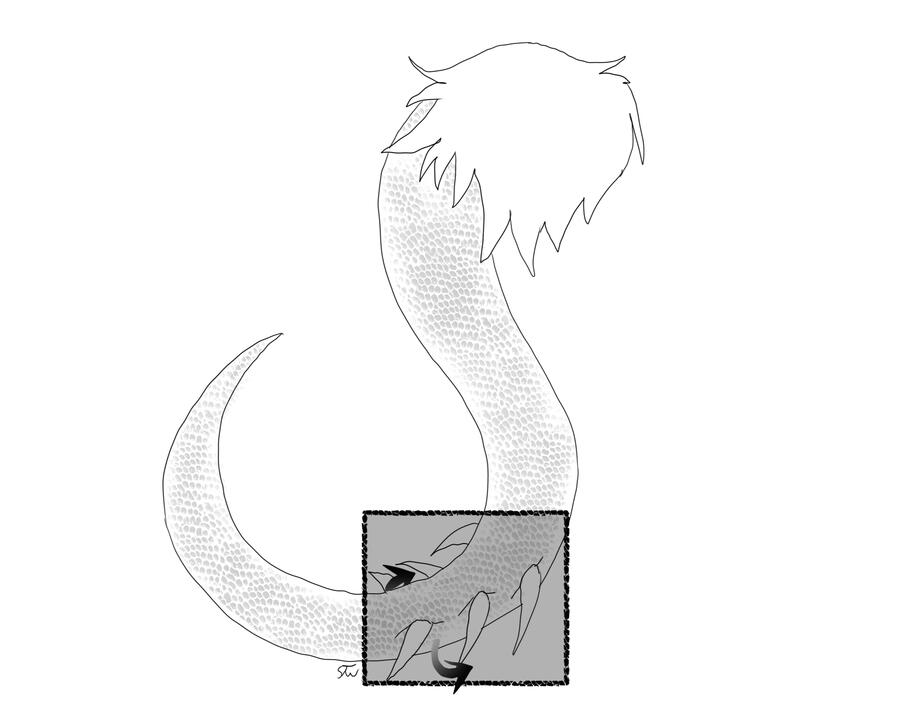
The tail of a viluporyx is snake-like and prehensile. The bones in the tail have an extra joint and vemon pouch at each tip, allowing the viluporyx to force the venomous, sharp bones through its scales into an attacker for a painful last resort.
Some viluporyx have a rattler at their tail tip (similar to rattlesnakes).
- Color -
Viluporyx are generally neutral colors but may have some other accents of low saturation. However, the tongue can be any color, and the eyes usually match that color. There will NEVER be bright viluporyx of many colors (sparkle viluporyx).
The snake tail and wings are generally the only body parts can sport intricate patterns.
BEHAVIOR
Viluporyx prefer to eat non-sapient ungulates. Plants will not give them the nutrients they need to survive as adults (although pups can survive on them for the first year of their life). Viluporyx will morally not consume any creature that is as smart as they are - namely, very smart, since a viluporyx's intelligence is similar to that of a human. Despite having the capacity to make tools and even entire villages, viluporyx find more value in strength than intelligence and prefer a life focused on their physical abilities.
They are usually loners (or duos for mates or romantic interests).
Viluporyx generally have names that are a somewhat complicated/hard to pronounce mash-up of other species (ex. "ibekex", a mix of "ibex" and "snake"; or "liwk", a mix of "lizard" and "hawk").
TERRITORY
Viluporyx live in mountainous regions that are generally at least somewhat cold. They like to live in dens, which they decorate with items from hunts such as bones or pelts (which make comfortable bedding). Their territory size is usually large but ultimately depends on prey scarcity. Viluporyx will actively fight others of their own species that intrude but are more lenient towards other sapient species, knowing they might have something valuable to offer or perhaps be just passing though. Despite this, anything that is percieved as a threat will be bitten, and the viluporyx could care less if it is fatal or not, as long as the intruder leaves. Territory rights are usually the only reason viluporyx will kill something other than prey.
TRADING
Some viluporyx who have had good experiences with outsiders will open up trade routes within their territory for sapient creatures passing through. Common products up for trade include animal bones and even their own venom, which is generally regarded as highly valuable among other creatures. Viluporyx will usually accept food to receive in a trade, but most will also settle for decorative items (skulls of horned animals are a common favorite).
PARENTING
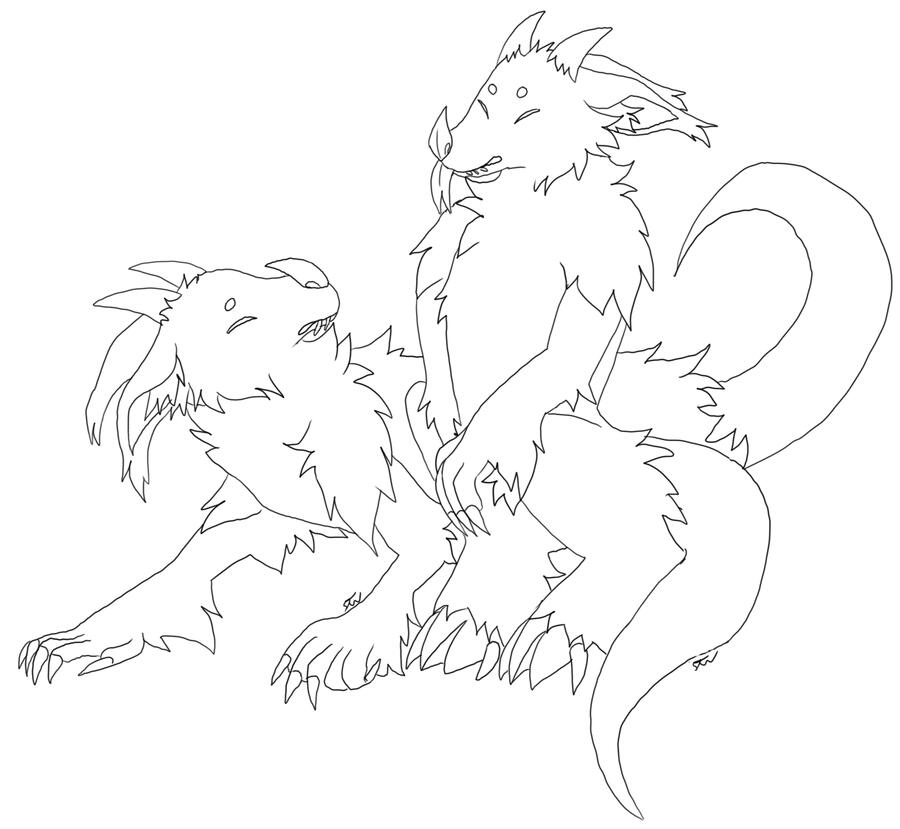
Viluporyx mate for life, choosing mates based on strength and/or horn size (generally, the longer the horns, the more attractive the viluporyx is regarded as). Males are slightly larger, but females are generally fluffier. The gestation period for a female viluporyx is 5 months, or about 156 days. The babies are called pups and are often born two or three to a litter. Viluporyx parents will make a nest of any material readily available for their pups; both parents take care of them. Pups are born furless in warmer habitats and with fur in colder ones. Their eyes and ears stay closed for 7 days and they can eat soft food of either plants or meat immediately; therefore, female viluporyx do not have nipples or breasts because pups do not need milk. Pups have no wings and only one set of smooth nub horns (between the ears) at birth, and commonly walk on all fours. Viluporyx can live up to 80 years, although an earlier death from territorial disputes and hunting injuries is not uncommon.
TERMS OF SERVICE (TOS)
CREDITS
All usage of the viluporyx species asserts that you acknowledge Wintertine as the owner and creator of the species. I would appreciate it if you link this website when sharing viluporyx content.
ADOPTS AND BASES
You may create and sell viluporyx adopts and bases, as long as they adhere to the species information.
UNIVERSES
Viluporyx habitat, interactions, and diet are intentionally general so that you can fit them into whatever universe or story you want.
HYBRIDS
Feel free to hybridize them! Canonically though, they can only hybridize with creatures that also have fur and horns (just so that the offspring will look somewhat similar to the viluporyx), and hybrids are infertile.
NSFW
It is highly preferred that you keep viluporyx and all interactions with them SFW; keep in mind female viluporyx do not have breasts or nipples and both sexes' reproductive parts are hidden by fur.